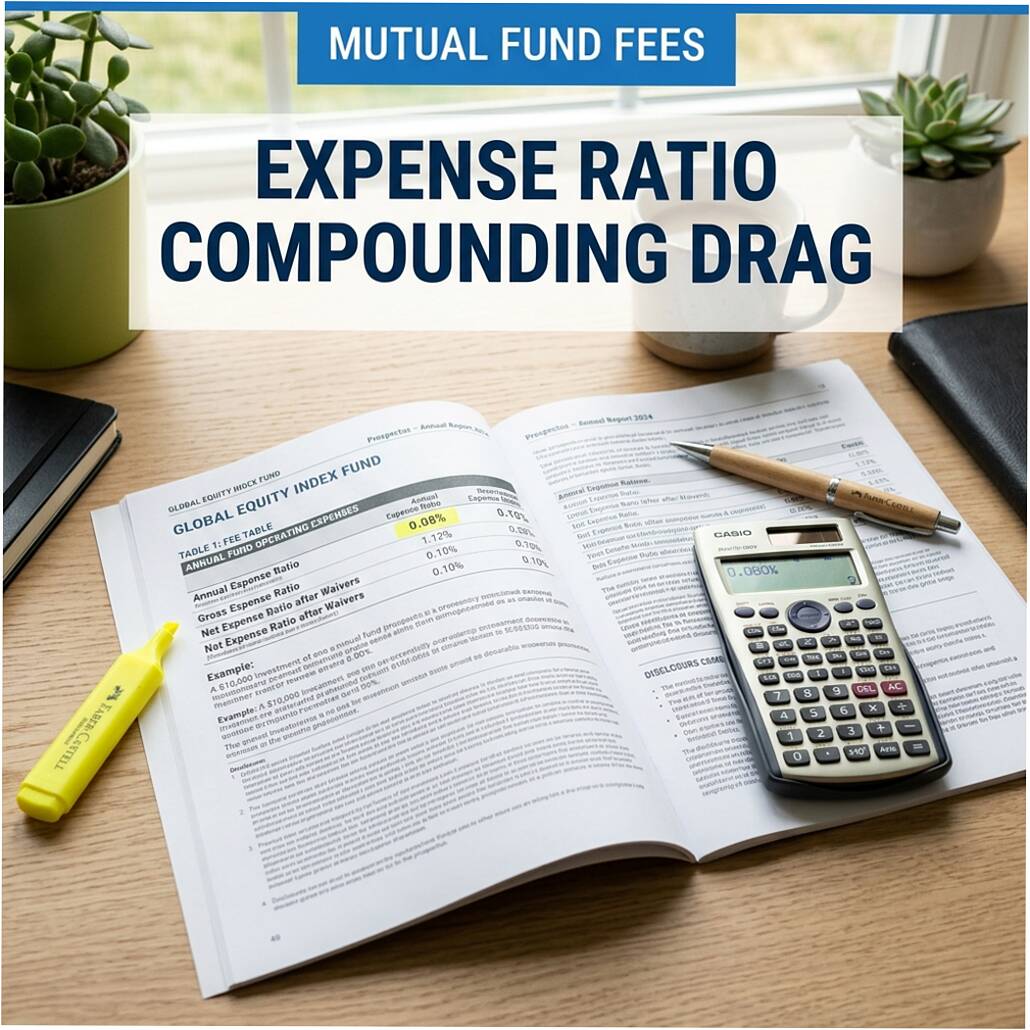
Fund expense ratios appear minor when reviewing fund prospectuses. Comparing a low-cost index fund against an expensive active mutual fund reveals dramatic compounding differences.
Consider $100,000 invested over thirty years at a 7% gross annual return. A low-cost index fund charging 0.03% grows to $754,772, while an active fund charging 0.75% reaches $616,331.
The 0.72% expense ratio gap costs $138,441 in lost terminal wealth over thirty years. In year one, the fee difference is just $720, but compounding multiplies that gap over time.
Selecting low-cost broad index funds preserves maximum compounding power for your portfolio.
What is the expense ratio on your largest index fund holding?
(Not financial advice. For educational purposes only.)