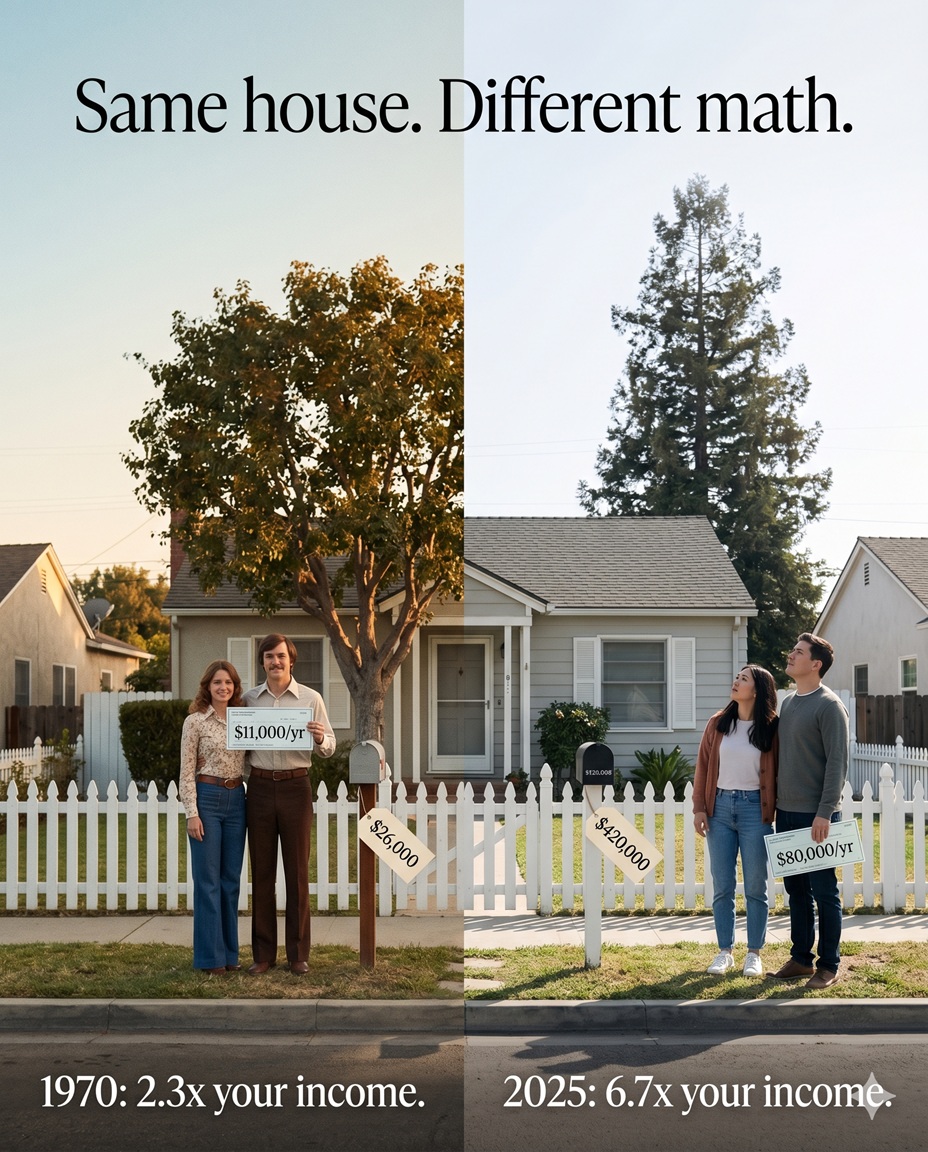
In 1970, the median home cost about 2.3 times the average household income. Today it costs roughly 6.7 times.
That gap is not a feeling. It is arithmetic. A household earning the 2025 median income of approximately $80,000 would need to earn nearly $232,000 to buy today’s median-priced home at the same affordability ratio their parents had. (Source: U.S. Census Bureau median household income; National Association of Realtors median existing-home sale price — confirm figures against most current release before publishing.)
This is what makes “just save more” and “stop buying lattes” so exhausting to hear. The math changed. The ratio more than doubled in 55 years. A single generation working at the exact same relative effort, discipline, and savings rate as the 1970s generation would still fall short — not because of choices, but because the denominator moved.
The one thing that is actionable here: stop measuring your progress against your parents’ timeline. Their 2.3x world no longer exists. Building toward homeownership now means a longer runway, more aggressive income growth, and creative paths like house hacking or geographic arbitrage. Not a personal failure.
Share this with anyone who has told a younger person to “just work harder” when it comes to buying a home.
Save this post — it’s worth coming back to.
Does this math change how you think about your parents’ generation?